Punitive damages bad faith insurance: states that allow

Punitive damages bad faith insurance: states that allow

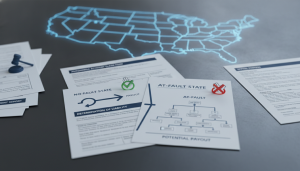
Disclaimer: This article is informational and does not constitute legal or insurance advice. Insurance claim rules (statute of limitations, denial appeal deadlines, bad faith elements, ERISA procedures) vary by state and policy specifics. For your specific claim or denial, consult a qualified attorney licensed in your state, file a complaint with your state Department of Insurance, or contact the ABA Lawyer Referral Service. Imagine you have dutifully paid your homeowners insurance premiums for over a decade. When a catastrophic storm hits your area in early 2026, causing significant structural damage, you expect your insurer to honor the contract. Instead, the company denies your claim without conducting a proper inspection, ignores your phone calls, and offers a “take it or leave it” settlement that covers less than 10% of the repair costs. This scenario is a classic example of potential bad faith. While you are entitled to the money owed under your policy (compensatory damages), you may also wonder if the insurer can be punished for such egregious behavior. This is where the concept of punitive damages bad faith insurance becomes a critical component of your legal strategy. In 2026, the landscape of insurance litigation continues to evolve as state legislatures and courts balance the rights of policyholders against the financial stability of the insurance industry. Punitive damages are not available in every insurance dispute. They are reserved for cases where an insurer’s conduct goes beyond a simple mistake or a legitimate disagreement over claim value. To successfully pursue these damages, you must navigate a complex web of state-specific statutes and judicial precedents. Understanding the broader landscape of Bad Faith Insurance & Denial Appeals 2026: Regulatory Complaints is the first step in determining if your case warrants more than just a standard reimbursement. Understanding Punitive Damages in Bad Faith Insurance Claims To understand punitive damages, you must first distinguish them from compensatory damages. In any insurance dispute, compensatory damages are designed to “make you whole.” They cover the policy benefits you were denied, interest on those late payments, and sometimes the emotional distress or financial losses caused by the delay. Punitive damages, however, serve a different purpose: they are intended to punish the defendant (the insurance company) and deter similar misconduct by other insurers in the future. According to Justia, the legal encyclopedia, punitive damages are “extra-contractual,” meaning they fall outside the specific terms of your insurance policy. The threshold for …


Health insurance denial: internal + external review appeal

Health insurance denial: internal + external review appeal

Disclaimer: This article is informational and does not constitute legal or insurance advice. Insurance claim rules (statute of limitations, denial appeal deadlines, bad faith elements, ERISA procedures) vary by state and policy specifics. For your specific claim or denial, consult a qualified attorney licensed in your state, file a complaint with your state Department of Insurance, or contact the ABA Lawyer Referral Service. Imagine it is a Tuesday morning in October 2026. You open your mailbox to find a letter from your health insurance provider regarding the life-changing surgery or the specialty medication your doctor prescribed last month. Instead of an approval, you find a formal notice of “Adverse Benefit Determination”—a denial. For many Americans, this moment feels like a dead end, a bureaucratic wall standing between them and necessary medical care. However, receiving a denial is not the final word; it is often just the beginning of a structured legal and clinical dispute process designed to protect your rights as a patient and a policyholder. In 2026, the landscape of health insurance remains complex, governed by a patchwork of federal protections like the Affordable Care Act (ACA) and the Employee Retirement Income Security Act (ERISA), alongside specific state-level insurance mandates. Understanding how to navigate a Health Insurance Disputes 2026: Denial Appeals, ERISA, Prior Auth framework is essential for securing the coverage you paid for. Whether your claim was rejected due to a lack of “medical necessity,” an administrative error, or a dispute over out-of-network status, you have the right to challenge the decision through both internal and external review processes. This guide provides a comprehensive roadmap for consumers to fight back against insurance denials effectively. Understanding the “Why”: Decoding Your Denial Letter The first step in any appeal is identifying the specific reason your claim was denied. Under federal law, your insurance company is required to provide a written explanation for any denial, often referred to as an “Explanation of Benefits” (EOB) or a formal denial letter. In 2026, these letters must be clear and provide information on how to initiate an appeal. Common reasons for denial include “not medically necessary,” “experimental or investigational treatment,” “out-of-network provider,” or simply a “lack of prior authorization.” If your denial is based on a provider choice, you may be facing a Health insurance out-of-network coverage dispute, which requires a different evidence-gathering strategy than a medical necessity denial. For medical necessity disputes, the …

Flood insurance NFIP vs private: claim 2026

Flood insurance NFIP vs private: claim 2026

Disclaimer: This article is informational and does not constitute legal or insurance advice. Insurance claim rules (statute of limitations, denial appeal deadlines, bad faith elements, ERISA procedures) vary by state and policy specifics. For your specific claim or denial, consult a qualified attorney licensed in your state, file a complaint with your state Department of Insurance, or contact the ABA Lawyer Referral Service. Imagine waking up in the spring of 2026 to the sound of rushing water. As climate patterns continue to shift, flood events—once considered “hundred-year” anomalies—have become increasingly frequent across the United States. Whether you live in a coastal high-risk zone or an inland area previously thought to be safe, the immediate aftermath of a flood is a race against time and bureaucracy. In 2026, the landscape of flood insurance is split between the federally backed National Flood Insurance Program (NFIP) and a rapidly expanding private flood insurance market. Navigating a flood insurance NFIP claim in 2026 requires a different tactical approach than a private claim, as the rules governing deadlines, coverage limits, and dispute resolutions are fundamentally different. The frustration of a denied or underpaid claim is a common reality for many policyholders. You may find that your neighbor, whose home suffered identical damage, is receiving a much larger settlement because they opted for a private policy with “Replacement Cost Value” (RCV) coverage, while your NFIP policy only offers “Actual Cash Value” (ACV) for personal belongings. Understanding these nuances before a disaster strikes—or immediately after—is critical to protecting your financial future. This guide explores the 2026 requirements for filing claims, the common pitfalls that lead to denials, and the specific steps you must take to appeal a decision if your insurer fails to honor the terms of your policy. The Dual Landscape: NFIP vs. Private Flood Claims in 2026 In 2026, the choice between the NFIP and private flood insurance is no longer just about the premium cost; it is about the claim experience. The NFIP, managed by FEMA, remains the primary insurer for millions of Americans. However, its coverage is strictly capped by federal law at $250,000 for residential building structures and $100,000 for personal contents. For many homeowners in 2026, these limits are insufficient given the rising costs of construction and labor. Furthermore, the NFIP does not provide “Loss of Use” coverage, meaning if your home is uninhabitable, you are responsible for your own temporary …

Auto claim denied: appeal process 2026 by state

Auto claim denied: appeal process 2026 by state

Disclaimer: This article is informational and does not constitute legal or insurance advice. Insurance claim rules (statute of limitations, denial appeal deadlines, bad faith elements, ERISA procedures) vary by state and policy specifics. For your specific claim or denial, consult a qualified attorney licensed in your state, file a complaint with your state Department of Insurance, or contact the ABA Lawyer Referral Service. You open your mailbox or your digital portal in early 2026, expecting a settlement check, but instead, you find a formal letter stating your auto insurance claim has been denied. Whether the insurer cites a policy exclusion, a dispute over liability, or an alleged failure to provide timely documentation, the feeling is the same: frustration and financial uncertainty. In the current 2026 insurance landscape, where carriers increasingly rely on automated AI-driven adjustments and telematics data to evaluate claims, understanding the specific mechanics of the appeal process is more critical than ever for protecting your rights as a policyholder. The good news is that a denial is not the final word. Every state provides a framework for you to challenge an insurer’s decision, ranging from internal administrative reviews to formal complaints with the State Department of Insurance. Navigating this path requires a methodical approach, a clear understanding of your policy’s fine print, and an awareness of the 2026 regulatory deadlines that vary significantly from one state to the next. Before you accept a “no” that could cost you thousands of dollars, you must equip yourself with the tools to fight back effectively. For a broader look at the initial filing process, you may also refer to our Auto Insurance Claims 2026: Post-Accident, Fault & Settlement Guide to ensure your foundation was solid from the start. Decoding Your 2026 Auto Claim Denial Letter The first and most vital step in the 2026 appeal process is a meticulous analysis of the claim denial letter. Under the NAIC Unfair Claims Settlement Practices Model Act, which most states have adopted or adapted by 2026, insurance companies are legally required to provide a specific explanation for why your claim was rejected. They cannot simply issue a blanket “denied” notice; they must cite the specific policy language or factual findings that led to their conclusion. Common reasons in 2026 include “excluded drivers” not listed on the policy, “material misrepresentation” during the application process, or “failure to cooperate” with the investigation. In 2026, we are …

Auto claim fault determination: no-fault vs at-fault states

Auto claim fault determination: no-fault vs at-fault states

Disclaimer: This article is informational and does not constitute legal or insurance advice. Insurance claim rules (statute of limitations, denial appeal deadlines, bad faith elements, ERISA procedures) vary by state and policy specifics. For your specific claim or denial, consult a qualified attorney licensed in your state, file a complaint with your state Department of Insurance, or contact the ABA Lawyer Referral Service. Imagine you are driving through a busy intersection in early 2026 when another vehicle suddenly merges into your lane, causing a collision. In the immediate aftermath, your primary concerns are safety and vehicle repairs, but a high-stakes legal and financial process is already beginning: the determination of fault. As of 2026, the landscape of auto insurance remains a complex patchwork of state-specific regulations that dictate who pays for damages, how much you can recover, and whether you have the right to take a case to court. Understanding the nuances of auto claim fault determination is not just a matter of academic interest; it is the deciding factor in whether your insurance premiums skyrocket or whether you receive a settlement that covers your medical bills and lost wages. The process of assigning blame in a car accident is rarely as straightforward as one driver admitting “it was my fault.” Insurance companies, guided by state statutes and the National Association of Insurance Commissioners (NAIC) standards, employ sophisticated methods to evaluate evidence and apply negligence laws. Whether you live in a “no-fault” state or an “at-fault” (tort) state, the outcome of your claim hinges on how these rules are applied to your specific situation. This guide will navigate the critical differences between these systems in 2026, explain the legal standards of negligence, and provide actionable steps for disputing a determination that you believe is unfair. How Fault is Determined in a Car Accident In 2026, the process of auto claim fault determination remains a multi-layered investigation conducted primarily by insurance adjusters. When you file a claim, the insurance companies involved will assign an adjuster to review the facts. These professionals do not merely look at the damage; they analyze police reports, witness statements, weather conditions, and increasingly in 2026, digital data from vehicle “black boxes” (Event Data Recorders) and telematics. The goal is to determine which driver’s actions—or lack thereof—violated the standard of care expected on the road. For a deeper dive into the immediate steps following a collision, you …

Auto claim settlement negotiation: counter lowball offer

Auto claim settlement negotiation: counter lowball offer

Disclaimer: This article is informational and does not constitute legal or insurance advice. Insurance claim rules (statute of limitations, denial appeal deadlines, bad faith elements, ERISA procedures) vary by state and policy specifics. For your specific claim or denial, consult a qualified attorney licensed in your state, file a complaint with your state Department of Insurance, or contact the ABA Lawyer Referral Service. Imagine it is a Tuesday morning in 2026. You are checking your email, expecting a fair settlement offer from the insurance company following a stressful car accident that occurred last month. Instead, you find a digital document proposing a sum that barely covers your initial emergency room visit, let alone the ongoing physical therapy or the significant damage to your vehicle. This scenario is increasingly common as insurers utilize sophisticated, AI-driven claims software in 2026 to minimize payouts. Receiving a lowball offer is not the end of the road; rather, it is often the opening move in a complex game of financial chess. Negotiating an auto claim settlement requires a blend of patience, meticulous documentation, and a firm understanding of your rights under state law. Whether you are dealing with your own insurer (a first-party claim) or the at-fault driver’s company (a third-party claim), the objective of the insurance adjuster is the same: to close the file as quickly and cheaply as possible. To protect your financial future, you must be prepared to counter their initial offer with evidence-backed arguments. For a foundational understanding of how these claims are initiated, you may want to review our comprehensive Auto Insurance Claims 2026: Post-Accident, Fault & Settlement Guide before diving into the nuances of negotiation. The Anatomy of a Lowball Offer in 2026 In 2026, the term “lowball offer” refers to a settlement proposal that is significantly below the actual value of the damages incurred. Insurance companies often use automated systems to calculate these initial figures. These algorithms may rely on “market averages” that do not account for the specific condition of your vehicle or the unique nature of your injuries. Adjusters might also apply aggressive depreciation schedules to your car’s parts or use “Colossus”-style software to categorize your pain and suffering into rigid, undervalued brackets. The primary reason for a lowball offer is often the insurer’s attempt to test your resolve and knowledge. They anticipate that many claimants are under financial duress—perhaps due to missed work or mounting …

Bad Faith Insurance & Denial Appeals 2026: Regulatory Complaints

Bad Faith Insurance & Denial Appeals 2026: Regulatory Complaints

Disclaimer: This article is informational and does not constitute legal or insurance advice. Insurance claim rules (statute of limitations, denial appeal deadlines, bad faith elements, ERISA procedures) vary by state and policy specifics. For your specific claim or denial, consult a qualified attorney licensed in your state, file a complaint with your state Department of Insurance, or contact the ABA Lawyer Referral Service. Imagine it is March 12, 2026. You have spent years diligently paying your premiums for homeowners, auto, or health insurance, trusting that the safety net would be there when you needed it. However, after a significant loss, you receive a terse letter stating your claim has been denied. Even worse, the insurer’s explanation is vague, they have stopped returning your calls, or they are demanding an impossible mountain of paperwork that seems designed solely to delay payment. This is the frustrating reality for many policyholders navigating the complex world of **bad faith insurance claim 2026** disputes. In 2026, the relationship between insurers and consumers is more data-driven than ever. While technology has streamlined some processes, it has also introduced new hurdles, such as automated “algorithmic denials” that can lead to unfair claims practices. Understanding your rights in this landscape is critical. Insurance companies have a legal and ethical duty to act in “good faith and fair dealing.” When they prioritize their profit margins over their contractual obligations to you, they may be crossing the line into bad faith. This guide provides an actionable roadmap for identifying these tactics, navigating the 2026 regulatory environment, and holding insurers accountable through state Departments of Insurance and the legal system. What Constitutes a Bad Faith Insurance Claim in 2026? A bad faith insurance claim occurs when an insurance provider breaches the implied covenant of good faith and fair dealing that exists in every insurance contract. In 2026, the legal standard generally requires proving that the insurer lacked a reasonable basis for denying or delaying benefits and that the insurer knew or recklessly disregarded the fact that it lacked a reasonable basis for its actions. It is not enough for the insurer to simply be wrong about the law or the facts; there must be an element of unfairness or dishonesty in their conduct. When you analyze a bad faith insurance claim: elements to prove (state law), you must look at the specific statutes in your jurisdiction. Most states follow models similar …

Auto claim filing process: step-by-step after accident

Auto claim filing process: step-by-step after accident

Disclaimer: This article is informational and does not constitute legal or insurance advice. Insurance claim rules (statute of limitations, denial appeal deadlines, bad faith elements, ERISA procedures) vary by state and policy specifics. For your specific claim or denial, consult a qualified attorney licensed in your state, file a complaint with your state Department of Insurance, or contact the ABA Lawyer Referral Service. The immediate aftermath of a car accident is often a blur of adrenaline, confusion, and stress. In 2026, as vehicle technology becomes more complex and insurance premiums continue to fluctuate, navigating the auto claim filing process requires more than just a phone call to your agent. You are likely facing a mountain of paperwork, medical bills, and the daunting task of proving your losses to a multi-billion dollar corporation. Whether you are dealing with a minor fender-bender or a significant collision, understanding your rights as a consumer is the first step toward securing a fair recovery. Many drivers feel overwhelmed by the technical jargon and the strict deadlines imposed by insurance policies. You might wonder if you should call your own insurer first or if you are required to speak with the other driver’s representative. This guide serves as a comprehensive roadmap for the auto claim filing process in 2026, designed to empower you with the knowledge needed to handle adjusters, document damages, and avoid the common pitfalls that lead to claim denials or undervalued settlements. The Immediate Response: Securing the Scene and Gathering Evidence The auto claim filing process actually begins the moment the collision occurs, long before you log into an app or pick up the phone. Your primary responsibility is safety, but your secondary responsibility is the preservation of evidence. In 2026, insurance companies rely heavily on digital evidence, making your initial actions at the scene critical for the eventual outcome of your claim. According to guidelines from the National Highway Traffic Safety Administration (NHTSA), you should first move your vehicle to a safe location if possible and check for injuries. Once safety is established, you must call the police to request an official accident report. Even if the damage appears minor, a police report provides an objective third-party account of the incident, which is vital for establishing liability. While waiting for authorities, use your smartphone to capture high-resolution photos and videos of the scene. Document the positions of all vehicles, traffic signals, skid …

Health Insurance Disputes 2026: Denial Appeals, ERISA, Prior Auth

Health Insurance Disputes 2026: Denial Appeals, ERISA, Prior Auth

Disclaimer: This article is informational and does not constitute legal or insurance advice. Insurance claim rules (statute of limitations, denial appeal deadlines, bad faith elements, ERISA procedures) vary by state and policy specifics. For your specific claim or denial, consult a qualified attorney licensed in your state, file a complaint with your state Department of Insurance, or contact the ABA Lawyer Referral Service. In 2026, navigating the maze of a health insurance dispute can feel like a full-time job you never applied for. You may have recently opened a letter from your insurer stating that a life-saving procedure, a necessary medication, or a routine diagnostic test has been denied. Whether the reason cited is “lack of medical necessity” or a “failure to obtain prior authorization,” the frustration is the same. As healthcare costs continue to rise in 2026, insurance carriers are increasingly utilizing automated review systems and stringent clinical algorithms, making it more critical than ever for you to understand your rights and the specific procedural steps required to overturn a denial. The landscape of a health insurance dispute 2026 is defined by a tug-of-war between consumer protections and cost-containment strategies. While federal and state regulations have evolved to provide more transparency, the burden of proof often remains on you, the patient. This guide explores the complexities of modern claim denials, the nuances of the Employee Retirement Income Security Act (ERISA), and the shifting requirements for prior authorization. By understanding the mechanisms of internal appeals and external reviews, you can move from a position of confusion to one of informed advocacy, ensuring that your health remains the priority over an insurer’s bottom line. Common Reasons for Health Insurance Claim Denials in 2026 As we move through 2026, the reasons for claim denials have become increasingly sophisticated. One of the most frequent hurdles is the “medical necessity” determination. Insurers often use their own internal clinical guidelines—which may be more restrictive than those of your treating physician—to argue that a requested service is not required for your diagnosis. In 2026, many of these determinations are initially flagged by artificial intelligence (AI) tools that scan thousands of claims per hour. If your claim doesn’t perfectly align with the pre-programmed “standard of care,” it may be automatically rejected before a human doctor even sees it. Another prevalent issue in 2026 involves administrative and coding errors. A single digit out of place on a billing …