
What to do immediately after a car accident: 24h / 7d / 30d timeline
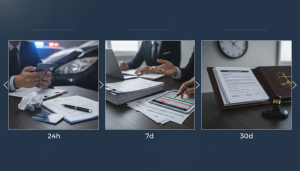
Disclaimer: This article is informational and does not constitute legal advice. Personal injury laws (statute of limitations, damages caps, comparative negligence rules) vary by state and case specifics. For your specific case, consult a qualified attorney licensed in your state, your state bar association, or the ABA Lawyer Referral Service. A car accident can be a jarring and disorienting event, leaving you unsure of what to do next. In 2026, navigating the aftermath requires a clear understanding of the steps you need to take to protect your health, your legal rights, and your financial well-being. From the immediate moments after impact to the weeks that follow, a structured approach is crucial. This guide provides a comprehensive timeline, detailing the essential actions you should consider in the 24 hours, 7 days, and 30 days following a car accident. Immediate Actions: The First 24 Hours After a Car Accident The moments immediately following a car accident are often chaotic, but taking specific, calm actions can significantly impact your safety and the strength of any future personal injury claim. Your priority should always be safety and seeking medical attention. First, ensure your safety and the safety of others. If possible and safe, move your vehicle to the side of the road or out of the flow of traffic. Turn on your hazard lights. Check for injuries to yourself and any passengers. Even if you feel fine, it’s vital to assess the situation for potential harm. According to the National Highway Traffic Safety Administration (NHTSA), ensuring the safety of all involved parties is paramount after a collision. Next, contact emergency services. Dial 911 immediately to report the accident. This will dispatch police and, if necessary, an ambulance. A police report creates an official record of the incident, which is crucial for insurance claims and potential legal proceedings. When the police arrive, cooperate fully, but avoid admitting fault or making speculative statements about the accident’s cause. Stick to the facts as you observed them. While waiting for emergency responders, if you are able and it is safe, begin collecting evidence. Use your smartphone to take photos and videos of the accident scene from various angles, including vehicle damage, road conditions, traffic signs, and any visible injuries. Exchange information with all involved drivers and witnesses, including names, contact details, insurance information, and vehicle license plate numbers. Do not engage in arguments or confrontational discussions with other …